




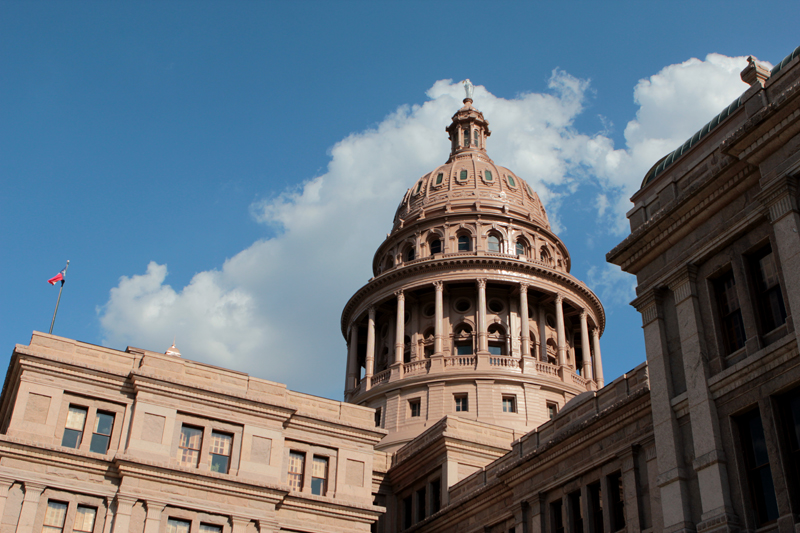
The 2025 legislation that passed with the signing of Governor Greg Abbott’s pen saw quite a few additions and changes to bills regarding students and their lives as they walk school hallways and learn in classrooms.
Students can already recognize several changes to the school’s functioning, but many are unaware of the cause of these changes.
LAWS
The following list details the laws most relevant to students that were added or changed during the 89th Texas Legislature Session, which took place from Jan. 14 to Jun. 2 of this year.
- HB 2: $8.5 billion is going to the funding of public schools. This will include, but is not limited to teacher compensation, non-administrative staff pay raises, utilities, transportation, career and technical education, and teacher preparation and certification initiatives. Sept. 1 is the earliest effective date.
- SB 260: The school safety allotment—which provides schools with the budget to improve security and cover equipment, training, and facility upgrades—was raised to $20 per student and $33,540 per campus. Effective Sept. 1.
- HB 1458: Requires an armed security officer to be present on each public school campus during instructional hours and allows districts to appoint reserve (part-time/volunteer) police officers. Effective Sept. 1.
- SB 870: If in uniform, school marshals are allowed to openly carry a handgun as opposed to concealing it. Effective Sept. 1.
- SB 12: Prohibits school programs, activities, and clubs that focus on race, ethnicity, gender identity, or sexual orientation, and bars school employees from assisting a student in socially transitioning at school. SB 12 does not list any specific student organizations.
Instead, it says schools cannot sponsor clubs that are primarily focused on advocating for political, gender identity, or sexual orientation topics. Effective Sept. 1.
- HB 6: Schools may place students in in-school suspension for extended periods, but the placement must be reviewed at least every 10 school days. Out-of-school suspensions are capped at three school days per incident. DAEP placement for vape possession is no longer mandatory; districts now have discretion. Effective with the 2025-2026 school year.
HB 824: Social studies classes are required to develop civic knowledge, which means adding TEKS about the role of government officials, election laws and voting processes, eligibility requirements to run for office, Robert’s Rules of Order—a manual for running parliamentary meetings—and the elected officials that represent students. Effective with the 2025-2026 school year.
- SB 13: Libraries are not able to add materials to their collection if they are deemed harmful, rated sexually explicit or containing such content, if they are excessively vulgar, or deemed educationally unsuitable. Parents can access and place limits on their own child’s library materials and can challenge items, which are then reviewed under district policy. Effective Sept. 1.
- HB 1481: Requires districts to adopt and enforce a policy banning student use of personal communication devices (phones, smartwatches, laptops, etc.) anywhere on school property during the school day, starting in 2025–2026. Districts must include disciplinary consequences, which may include confiscation. Read more about this law at Guyer here.
Good and bad effects will inevitably stem from this list; Budget improvements and security measures are to create a safer and finer atmosphere at school, but some arguments have been made against the banning of phones and the supposed censoring of library materials. Among those affected, positive and negative views have already created heavy discussion.
As more safety measures are put in place and regulations of curriculum and reading are enforced, the rights of students become a prevalent topic of discussion.
RIGHTS
When students walk into Guyer, they aren’t stripped of their constitutional rights. Their freedom to express, to protest, and to practice whatever religion they choose cannot be infringed upon.
- Students’ freedom of speech and expression is always maintained, meaning students can speak out, hand out flyers, and wear expressive clothing as long as they don’t substantially disrupt school, use lewd/offensive language, or violate content-neutral school policies.
- Schools can create rules that regulate the time, place, and manner of expression. This is to make sure that students aren’t expressing themselves by barging into classes or by using offensive language.
- Schools can’t enforce dress codes in a way that discriminates based on sex or targets a particular political or religious viewpoint. Under federal civil-rights law, rules that say only girls can wear certain clothes, or that punish students for clothing that reflects their gender identity, can be vulnerable to legal challenges. Districts can still have content-neutral dress rules (for example, requiring fingertip-length skirts for anyone who chooses to wear a skirt).
- Some policies involving student privacy, gender identity, and club eligibility are currently being interpreted differently by school districts across Texas. Because the rules are still evolving, schools are awaiting final guidance from state and federal agencies.
- Students can organize protests, but schools may set reasonable rules about when and where they happen. If a student participates in a walkout during class, the school can treat it like any other unexcused absence—but they can’t punish them more harshly just because they disagree with their message.
With all of the new rules and regulations, many students feel like they are being overly constrained. It may comfort some students to know the large extent to which they can express themselves at school, as well as encourage them to start voicing their opinions so that they are heard.
Find the full list and in-depth information about the education bills passed during the 89th Legislative Session. Find more information and resources regarding students’ rights here.
This article provides general information based on current reporting and public legal sources. It is not intended as legal advice. Laws and school policies can change or be interpreted differently across districts, and individual circumstances may vary. Students with specific questions or concerns should speak with a parent, school counselor, or administrator.
This article was written by a student journalist who conducted extensive research and consulted reputable sources. While the information was fact-checked prior to publication, additional clarity may be needed as laws evolve. To request a correction or share concerns about accuracy, please contact the newspaper adviser, Heather Wright.